CHECK OUT THE BLOG
Looking for something specific? Search here.
What I’ve Learned in the Field: Reflections from Years in Early Childhood Education and Nature-Based Care
When I began my work in early childhood education, I believed I was building a program for children. Over time, I came to understand that I had stepped into something larger, a field that would shape me as profoundly as it shaped the children in my care. Years in a nature-based, play-driven environment have clarified what truly matters in early childhood. The most important lessons were not learned from a boxed curriculum or a checklist of outcomes. They were learned outdoors, in relationship, in stillness, in conflict resolution under open sky, and in partnership with families.
This is what the field has taught me.
Children Do Not Need to Be Rushed
The world rushes children. Early childhood education should not. Grass grows without urgency. Snow melts in its own time. A child who is given space will grow into their abilities naturally. I’ve learned that development cannot be forced without cost. When we slow down, children reveal brilliance that academic testing could never measure. Unhurried childhood is not indulgent. It is biologically aligned.
The Outdoors Regulates What Indoors Amplifies
I have watched dysregulation dissolve as soon as children meet fresh air. I have seen conflict soften beside a mud kitchen and tears dry under the open sky instantly. Nature is not a “bonus” to early childhood education. It is infrastructure. Children climb, carry, balance, negotiate risk, and solve problems in ways that cannot be replicated on plastic surfaces through teacher-led activities. Executive function is strengthened not by sitting still, but by meaningful movement. The field teaches resilience gently.
Boundaries Protect Community
This lesson took time. Early in my career, I believed flexibility equaled kindness. Experience taught me that boundaries are an essential part of this work, not only in relation to the self, but embedded within the philosophy and integrity of a program. Clarity is not rigid; it is one of the most supportive ways to move within this field. When expectations are transparent and applied consistently, families feel safer. When boundaries are respected, relationships remain intact. When we bend rules for one family, we unintentionally fracture trust for others. Clear structures reduce misunderstanding and prevent resentment from quietly taking root. They allow the educator to remain steady and present, rather than depleted by ongoing negotiation.
Professionalism in early childhood education is not at odds with warmth; it reinforces it. Over time, I have come to believe this: Warmth builds belonging, but boundaries make belonging sustainable.
Parents Are Navigating Their Own Tender Places
Behind every enrollment form is a parent handing you their heart. What we receive is not simply enrolling a child; we receive someone’s greatest vulnerability. In that heartfelt transition often comes hope, exhaustion, fear, prior experiences, expectations, and the quiet weight of wanting to do this season of parenting well. Sometimes that tenderness shows up as anxiety. Sometimes it arrives as urgency or projection. Sometimes it is expressed through deep gratitude. And occasionally, it reveals itself through control and an attempt to steady uncertainty in an unpredictable world.
Over time, I have learned that my role is not to eliminate that tenderness, but to hold it without becoming entangled in it. To offer steadiness without defensiveness. To listen carefully. To respond calmly. To communicate clearly even when emotions are heightened. I have learned that compassion does not require absorption. Boundaries and empathy can coexist. When I regulate myself first, conversations shift. When I remain grounded, families often find their footing more quickly. Experience has given me a quieter confidence, the ability to pause rather than react, to clarify rather than overexplain, and to trust that consistency builds trust more reliably than accommodation ever could. We are all parenting and educating, from our own nervous systems, shaped by our histories, our pressures, and the culture surrounding us. Recognizing this has softened me without compromising my clarity.
This field humbles you. It asks you to see beyond behavior in children and in adults alike. And if you stay long enough, you begin to understand that supporting families is not separate from supporting children. It is part of the same sacred work.
Stillness Is a Radical Offering
In a culture obsessed with output, offering children stillness feels almost rebellious. We are conditioned to measure learning by visible production: worksheets completed, letters mastered, milestones accelerated. Stillness, by contrast, does not photograph easily. It does not generate data points. It can look, to the untrained eye, like “nothing.”
But I have come to understand that stillness is not empty. It is integrative.
Sitting beside a frozen puddle.
Watching a beetle cross a log.
Listening to wind move through cottonwood leaves.
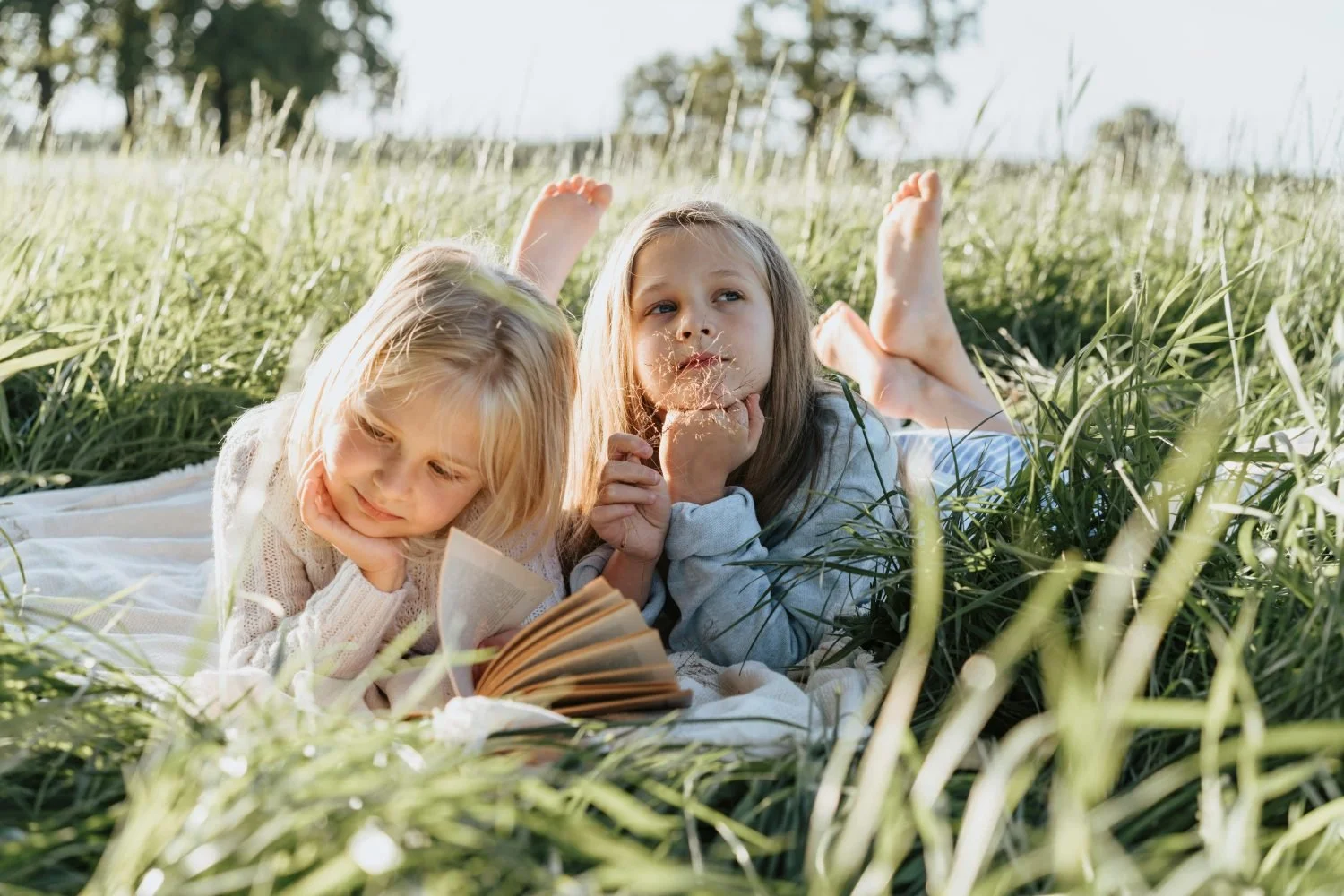
These moments are not pauses in learning; they are the conditions that make learning possible. In stillness, children consolidate experience. They process sensation. They develop attention organically rather than through compliance. They notice the quiet magic of their environment, and noticing is the foundation of inquiry. When children are given time to linger, they ask better questions. They build longer attention spans. They develop a relationship with the natural world that is rooted in observation rather than consumption.
Children do not need constant stimulation. They need attuned presence. They need adults who are comfortable enough to slow down with them, who trust that growth is happening even when it is not loud.
Stillness is not the absence of learning; it is the soil in which deeper learning takes root.
Community Is Built Intentionally
A nature school is not simply a curriculum model; it is a living ecosystem. It grows through trust. Through shared songs. Through muddy boots and little shoes lined up by the door. Through conversations at the end of day that stretch longer than planned. Through summer evenings when neighbors and families gather for music and a meal, it is a reminder that care is not transactional, it is relational.
Community does not happen accidentally. It is cultivated through consistency, transparency, and shared values. It is built when families understand not only how a program operates, but why. When expectations are clear. When communication is steady. When children see the same adults showing up with integrity day after day. In small, relationship-based programs, the health of the community directly shapes the experience of every child. Children feel when adults trust one another. They sense stability. It settles their bodies and frees them to explore.
When nurtured with intention, community becomes the root system of a program. It strengthens connection, nourishes belonging, and allows everyone within it to grow with greater confidence and joy.
Advocacy Is Part of the Work
I once believed my role was simply to care for children. To create a safe, nurturing environment. To guide play. To support development. Over time, I came to understand that this work carries broader responsibility. To work in early childhood education is also to protect the integrity of early childhood education itself.
The landscape of early childhood education shifts constantly. Academic expectations move earlier. Productivity becomes a metric. Childhood narrows in subtle ways. In that climate, silence can unintentionally signal agreement.
Play is crucial.
Wonder is vital.
Relationship is imperative.
These are not sentimental preferences; they are developmental necessities. When we diminish them, we do not accelerate learning, we compromise its foundation. Advocacy does not always look loud. Sometimes it looks like holding firm to developmentally appropriate practice. Sometimes it looks like extra time to explain to families why a child being ready matters. Sometimes it looks like resisting pressure to introduce what is premature simply because it is trending. If we do not articulate the value of unhurried, child-led learning, calmly, clearly, and consistently, then who will?
I’ve learned that to remain in this field is to participate in its protection.
The Work Changes You
This work does not leave the educator unchanged.
I am more relaxed than I once was, clearer, more anchored in what I know to be true. I no longer feel compelled to defend every choice; experience has given me the confidence to stand within them. The field has shaped me. The children have shaped me. The families, even the challenging ones, have shaped me. Each season has refined something: patience, discernment, steadiness, voice. This work asks for your heart, your boundaries, your humility, and your courage. It asks you to reflect when you would rather react. To soften without surrendering clarity. To lead without controlling. To never stop learning.
Over time, you begin to recognize a quiet reciprocity in the work. While you are tending to the environment, something within you is being tended as well.
And if you stay long enough, you realize something beautiful:
You were never just teaching in the field.
You were being grown in it.
What Endures
The field has taught me that early childhood education does not need to be accelerated, only protected. That community must be cultivated. That stillness is productive in ways that data cannot measure. That boundaries and warmth belong together. That parents are navigating tender terrain. And that advocacy is not optional for those who understand what is at stake. To work in early childhood education, especially in nature and in relationships, is to stand at the intersection of development and dignity. It is to trust slow growth. It is to hold space. It is to remain steady in a culture that moves quickly.
The longer I stay, the more certain I become that when we protect early childhood education, we strengthen the future.

The Youthful Art of Stillness: Embracing the Pause in Nature’s Classroom
We dwell in a world that often moves rapidly. This is especially true for young children and stillness can feel rare. Between hectic schedules, relentless stimulation, and the natural energy of childhood, the idea of expecting a preschooler to “be still” is not always appropriate but it can be healthy in the right environment. Nature has a way of slowing us down organically, inviting even the busiest little bodies to pause, notice, and breathe.It All Begins Here